
About Liqwith
From an experiment toFrom direct investments and tokenized assets to steward ownership and employee participation — we make innovative forms of financing and ownership accessible in the real world.
Financing · Steward Ownership · Participation

Where it started
IT Started with One Question
Can we utilize blockchain technology to investing in companies more direct, transparent, cheaper and accessible?
In 2017, we decided to find out.
We tokenized our first shares on the Ethereum blockchain as part of a fundraising experiment. Instead of maintaining ownership only through traditional systems, shares could now also be digitally represented and administered using blockchain technology.
We called it a Security Token Offering — STO
The experiment worked. More importantly, other entrepreneurs and investors became interested in what we had built.
That was the beginning of Liqwith
The Challenge
The Technology was
only the beginning
Putting a share on a blockchain turned out to be the easy part.
If tokenization was going to work in the real financial world, the complete process had to work as well.
Investors needed an experience that was simple and familiar. Companies needed to operate within existing legal and regulatory frameworks. Payments had to work with euros and existing payment methods. And lawyers, accountants and financial intermediaries needed to be able to work with the new infrastructure.
So instead of building another crypto platform, we started building a bridge between new technology and the existing financial world.
Four things that had to come Together
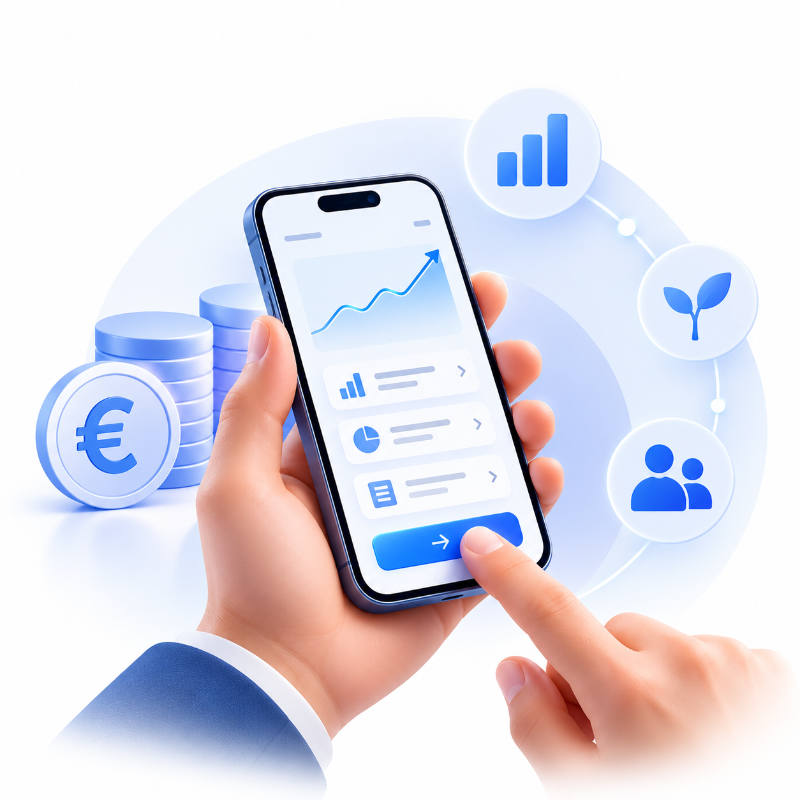
Ease of use for investors
Investing should feel familiar. Technology should simplify the process, not create another barrier.

Ready for Companies
Entrepreneurs should be able to organise financing and ownership without becoming blockchain specialists.
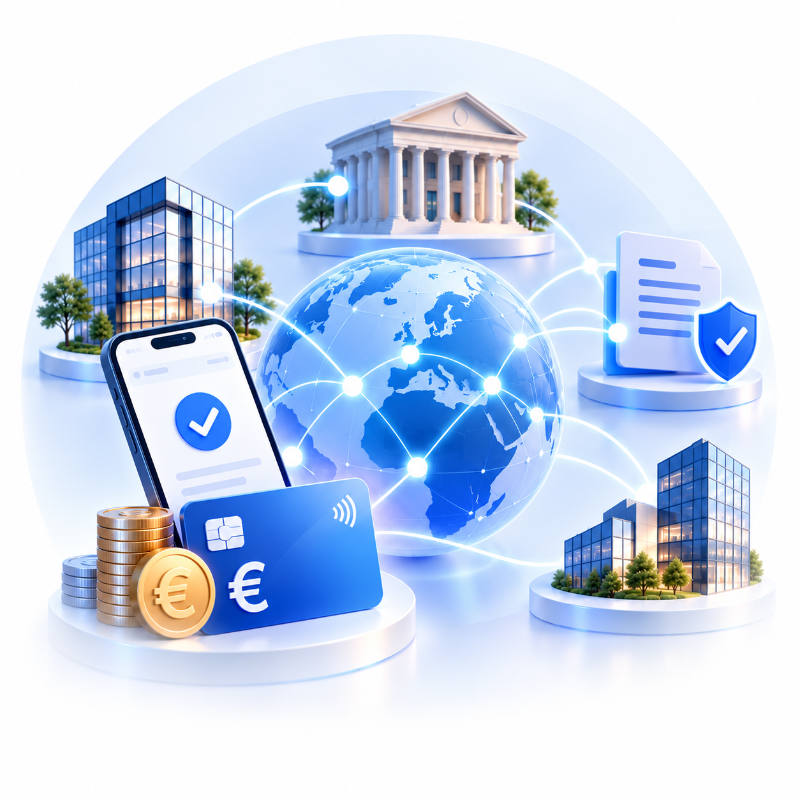
Connected to the financial world
Payments, onboarding, compliance and administration need to work together with existing financial infrastructure.

Supported by professionals
Financial intermediaries, lawyers, accountants and other specialists remain an important part of a professional investment ecosystem.
Our Journey
From first Token
to integrated platform
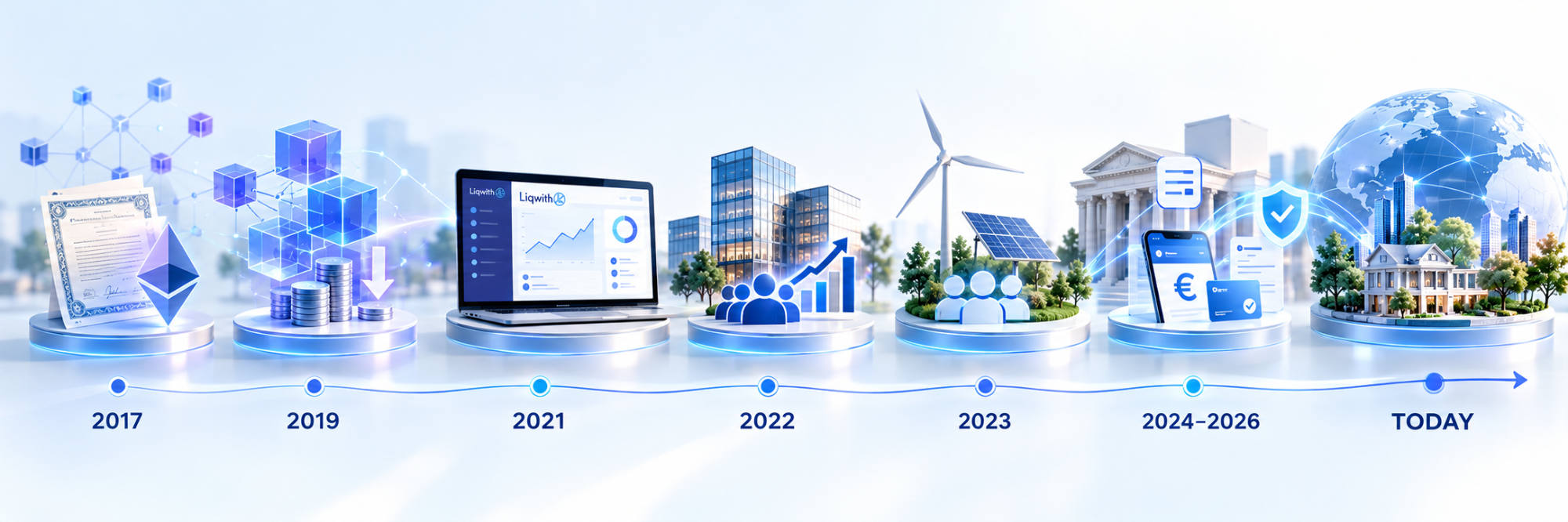
The first shares on Ethereum
Our journey starts with the tokenization of shares for a fundraising experiment. We introduce what we call a Security Token Offering.
Making transactions scalable
Fuse becomes part of our blockchain infrastructure, enabling us to significantly reduce the cost of tokenization and transactions
Liqwith Plaza
We start moving from individual, single-instance implementations to Liqwith Plaza: our integrated SaaS platform for companies, investors and professional partners.
Professional investment firms
The first Venture Capital and investment firms start using Liqwith technology, expanding the platform beyond individual fundraising propositions.
From Financing to Ownership
We expand into renewable energy assets and develop new applications for steward ownership and employee shareholding programmes.
Connecting the Ecosystem
We deepen our integrations with payment providers and professional partners, including Online Payment Platform, bringing payments, investor onboarding, compliance and tokenization together.
Infrastructure for direct investment & ownership
Liqwith has evolved into a technology platform supporting direct investments, steward ownership, employee participation and tokenization of financial and real-world assets.
What we believe
Technology should create more autonomy, not more complexity
Four principles have guided Liqwith from the beginning

Financial Innovation
We challenge traditional ways of organising financing and ownership when technology can make them better.

Transparency
Ownership, investments and transactions should be clear and understandable for everyone involved.

Cooperation
Innovation does not happen in isolation. We connect entrepreneurs, investors, financial intermediaries, lawyers, accountants and technology partners.

Autonomy
Companies should have more control over their financing, their investors and the way ownership is organised.